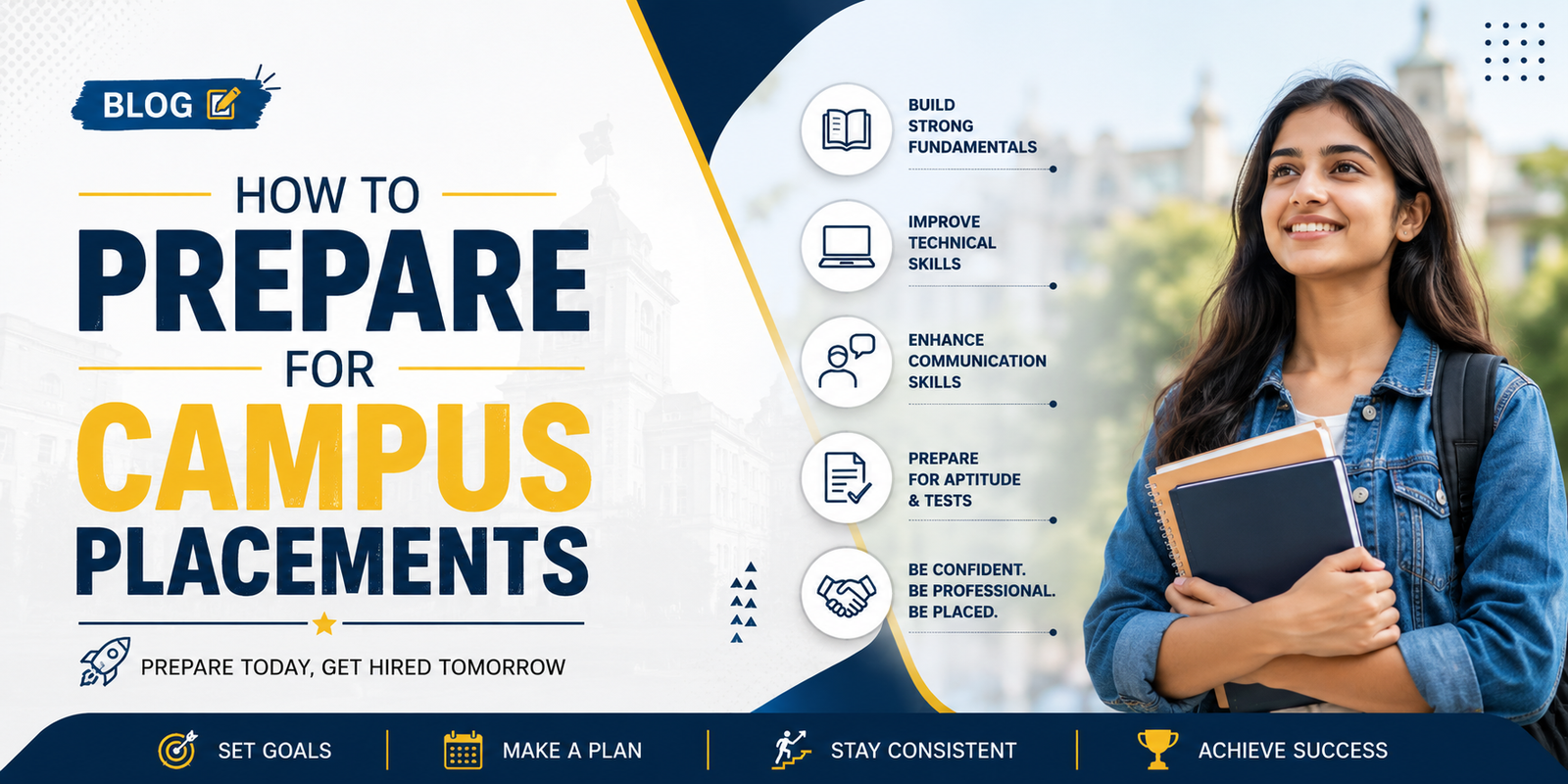
How to Prepare for Campus Placements: A Complete Guide for Students
 August 5, 2026
Table Of Content
- Why Campus Placement Preparation Matters
- Step 1: Understand the Campus Placement Process
- Step 2: Strengthen Your Aptitude Skills
- Step 3: Build Strong Technical Knowledge
- Step 4: Develop Communication Skills
- Step 5: Create a Professional Resume
- Step 6: Practice Mock Interviews
- Step 7: Improve Soft Skills
- Step 8: Research the Company
- Common Placement Mistakes to Avoid
- How Step Up Career Helps Students Succeed in Campus Placements
- Final Thoughts
Campus placements are one of the most important milestones in a student’s academic journey. Whether you’re pursuing engineering, management, commerce, or any other degree, securing a job through campus recruitment can give your career a strong start. However, success doesn’t happen by chance—it requires planning, preparation, and the right guidance.
In this guide, we’ll share practical campus placement preparation strategies, effective placement tips, and explain how Step Up Career helps students become placement-ready and confident professionals.
Why Campus Placement Preparation Matters
Campus recruitment is highly competitive. Companies evaluate candidates not only on their academic performance but also on their communication skills, problem-solving ability, technical knowledge, and overall confidence.
Starting your preparation early allows you to:
- Build confidence before interviews.
- Improve technical and soft skills.
- Create an impressive resume.
- Perform well in aptitude tests and group discussions.
- Increase your chances of receiving multiple job offers.
Step 1: Understand the Campus Placement Process
Most campus recruitment drives follow a structured selection process:
- Online aptitude test
- Technical assessment (if applicable)
- Group discussion or case study
- Technical interview
- HR interview
Knowing what to expect helps you prepare effectively for each stage.
Step 2: Strengthen Your Aptitude Skills
Aptitude tests are often the first screening round. Focus on improving:
- Quantitative aptitude
- Logical reasoning
- Verbal ability
- Data interpretation
Practice regularly using mock tests and previous placement papers. Time management is equally important, as many aptitude tests have strict time limits.
Step 3: Build Strong Technical Knowledge
Students should have a solid understanding of the core subjects related to their degree.
For example:
- Engineering students should revise programming languages, data structures, operating systems, databases, and networking.
- Commerce students should strengthen accounting, taxation, finance, and business concepts.
- Management students should focus on marketing, HR, finance, operations, and business analytics.
Interviewers often ask practical questions to assess how well you understand your subject.
Step 4: Develop Communication Skills
Good communication can make a significant difference during interviews.
Work on:
- Speaking clearly and confidently
- Listening actively
- Answering questions concisely
- Maintaining positive body language
Participating in presentations, debates, or mock interviews can help improve your confidence.
Step 5: Create a Professional Resume
Your resume creates the first impression.
Include:
- Educational qualifications
- Technical and soft skills
- Certifications
- Projects
- Internships
- Achievements
- Volunteer experience
Keep your resume concise, error-free, and tailored to the job role you’re applying for.
Step 6: Practice Mock Interviews
Mock interviews simulate real interview situations and help you identify areas for improvement.
Practice answering common questions such as:
- Tell me about yourself.
- Why should we hire you?
- What are your strengths and weaknesses?
- Where do you see yourself in five years?
Recording your practice sessions can help you improve your communication and body language.
Step 7: Improve Soft Skills
Employers look beyond academic scores.
Develop essential workplace skills like:
- Teamwork
- Leadership
- Problem-solving
- Critical thinking
- Adaptability
- Time management
- Emotional intelligence
These qualities often distinguish successful candidates from the rest.
Step 8: Research the Company
Before attending an interview, learn about the company.
Understand:
- Its products or services
- Company values
- Recent achievements
- Industry position
- Job role requirements
Demonstrating genuine interest shows professionalism and preparation.
Common Placement Mistakes to Avoid
Many students lose valuable opportunities due to avoidable mistakes, including:
- Waiting until the final semester to prepare
- Ignoring aptitude practice
- Using generic resumes
- Poor communication skills
- Lack of confidence
- Not researching the employer
- Arriving late for interviews
Avoiding these mistakes can significantly improve your chances of success.
How Step Up Career Helps Students Succeed in Campus Placements
Preparing alone can be overwhelming. That’s where Step Up Career supports students with structured guidance and practical training designed to improve employability.
Step Up Career helps students by offering:
- Personalized career counselling based on strengths and career goals.
- Career assessments to identify suitable career paths.
- Aptitude test preparation with practice sessions and performance analysis.
- Resume-building support to create professional, recruiter-friendly resumes.
- Mock interviews that simulate real hiring experiences.
- Soft skills and communication training to boost confidence.
- Interview preparation workshops with industry-focused guidance.
- Career planning sessions that help students align their education with long-term career goals.
Instead of focusing only on getting a job, Step Up Career equips students with the knowledge, confidence, and professional skills needed for long-term career success.
Final Thoughts
Campus placements provide an excellent opportunity to launch your professional career, but success requires consistent preparation. Improving your aptitude, technical knowledge, communication skills, and interview performance can significantly increase your chances of securing your dream job.
With expert guidance from Step Up Career, students receive personalized support throughout their placement journey—from career planning and skill development to interview preparation and confidence building. Investing in the right preparation today can open the door to rewarding career opportunities tomorrow.